I only found out about a couple of guys working with mesh networks because they hopped into the local maker space discord, which immediately caught my eye. It turned out they were forming a new nonprofit focused entirely on mesh radio, so I decided to tag along to the first official founding meeting for the JKPG mesh group, the exact same crew that now runs our local discord and the https://jkpg-mesh.se/ website.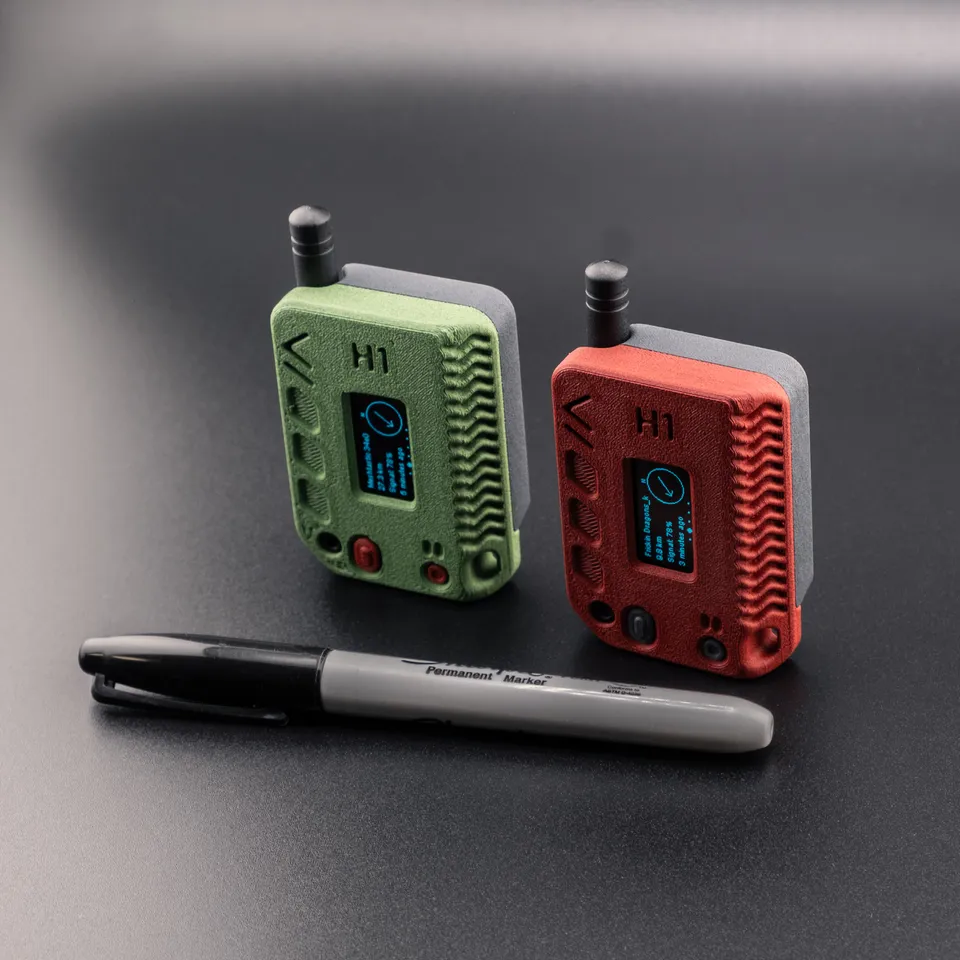
JKPG Mesh
The other members had already started playing around with Meshtastic firmware, so I dug a Waveshare rp2040 lora board out of my scrap pile, and I also bought a couple of new devices, specifically the Heltec v3 and later the Heltec v4, just to join the fun. I flashed them all with Meshtastic and managed to reach a centrally placed client station, and through that, I could actually see other people on the network.
Meshtastic test
To be able to compare the setups and analyze the range of mesh devices I put together a modified version of the Meshtastic firmware that would auto reply in a specific channel with the signal strength and SNR level. It acted like a poor mans Meshmapper, and I quickly noticed that different bare PCB hardware boards performed wildly differently. I took four different hardware platforms and taped them all to the west facing window of my house,
- Heltec v3 with a basic stock antenna
- Heltec v4 that honestly outperformed the rest
- Heltec Wireless Stick
- Waveshare rp2040 lora board from the parts bin
I have up to 30km of free line of sight from that window, so I just drove around and tested the signal from various places, which was honestly great fun.
Meshtastic and Meshcore
When I first heard about Meshcore, i was a bit troubled, mostly because my feeling was that the radio mesh space just wasn’t big enough for two players. Having this competition felt like it would balkanize the landscape, especially in a sparsely populated space like Sweden where we need every node we can get. The Meshtastic network here in Jönköping was not performing well at all, mostly because we simply didn’t have anywhere near enough active radios to create a real mesh. As folks in the UK found out, when you lack organic user density, you really need a structured repeater backbone to make things work (normally I am all for chaotic community builds, but we needed dedicated infrastructure). Not even ten times as many users would have made much of a difference here, and it definitely wouldn’t have tied together the whole Jönköping and Huskvarna area.
Start of the Meshcore network
And then a new user joined the JKPG-Mesh group, let’s call him Jesper, and he started talking up Meshcore and its dedicated repeater logic. I took down my messy array of test devices and reflashed them with Meshcore, taking the time to 3d print a ABS plastic holder for the Heltec v3 and WSL to sit properly on my window sill. I convinced my friend ZF whose place of work is in line of sight of my house about 7km away, to set up a node as a test. It worked, perfectly.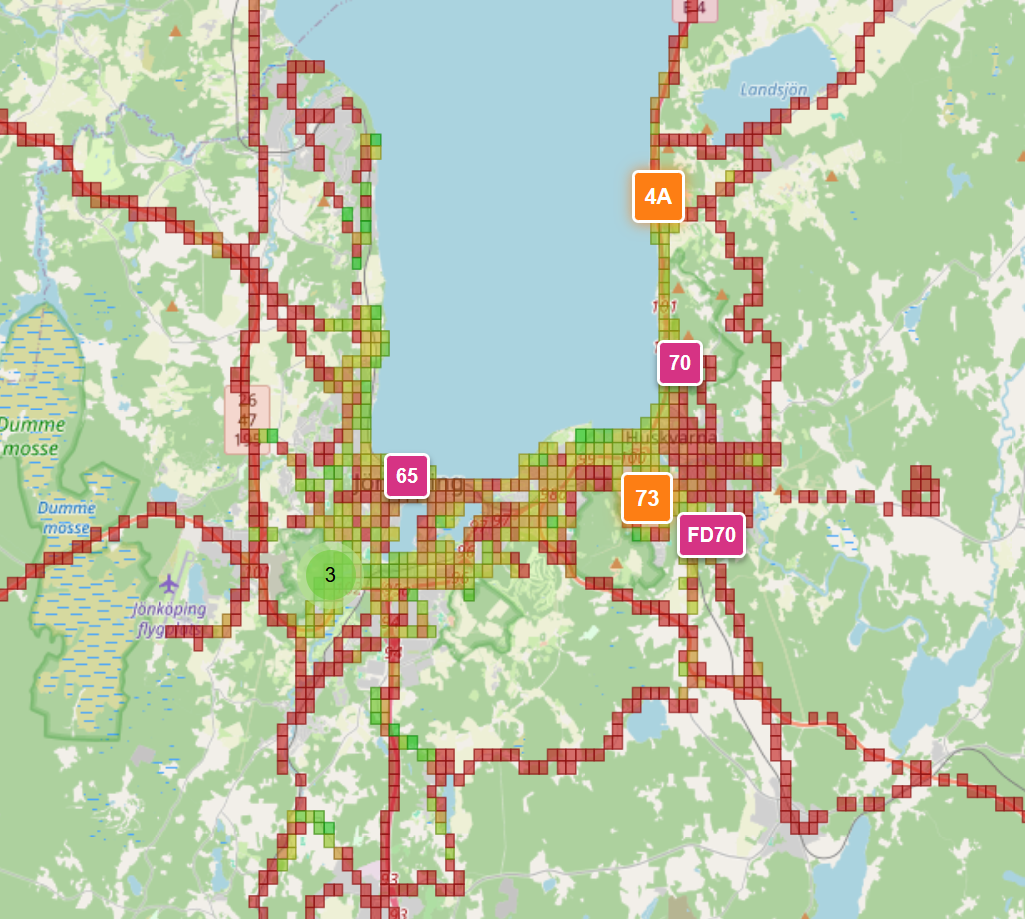
After that I placed a second repeater at my in laws house, which sits a bit north of me with an even better view. Most importantly, it had a clear view of the node that Jesper had placed in a high rise on the south side of town, and even with a 12km distance from my in laws, the connection was rock solid. Jesper and I could chat seamlessly even though the signal had to bounce from me to ZFs work, from him to my in laws, and finally to Jesper, creating an almost 30km chain. We didn’t exactly have a mesh yet, but we had a functional line, and it worked well enough for now.
With this minor success under our belts, we started planning on how to expand the network properly. Right now there are just a couple of isolated repeaters humming away, but we are slowly building out the mesh to hopefully reach everyone in the valley.
Expanding the network
The big challenge for 2026 is to reach ZFs home, which is 25km away. It doesn’t sound like an Olympic level of difficulty at first glance, but the terrain between us is just a series of hills, each one higher than the last, blocking the radio line of sight in incredibly frustrating ways. It will be a massive undertaking to route around, but it will also be a really fun build process.
My devices
My current setup isn’t 100% finished, but right now I have a node crammed into my car, which is mainly used for wardriving, refining the map data. I also keep one mobile unit floating around in my backpack, and one stationary node permanently at home.
Choosing Meshcore or Meshtastic
I sat down and tried to figure out why I was actually switching, so I put together this little breakdown of how the two firmwares handle the radio waves differently, since it really comes down to whether you want a chaotic party or a structured utility.feature Meshtastic Meshcore more information Routing Logic Flood routing where every node repeats Path routing where only repeaters repeat The old flood method is easy but can get messy and loud quickly. Battery Life Heavy power drain on handheld units Excellent life for silent companion nodes In the UK they found out that silent clients are the key to making small batteries last. Network Range Capped at seven hops to prevent crashing Supports up to 64 hops More hops mean you can actually route around those annoying hills. Delivery Proof Best effort delivery hoping it arrives Absolute confirmations on delivery Meshcore gives you a solid receipt when the message arrives, so no guessing. Barrier to Entry Very plug and play for beginners Needs planned infrastructure to work Meshtastic is still the king of getting someone on the air in five minutes flat. Urban Environments Bogs down from node spam in dense cities Thrives because repeaters cut through the noise As the guys in Austin realized, a structured backbone is the only way to survive city congestion. Ad hoc Mobility Instantly creates a working mesh for groups Flounders on spontaneous trips without repeaters As hikers are aware, sometimes you just need to turn things on and have them instantly talk to each other.
Maybe both
So maybe there isn’t a clear Meshtastic or Meshcore winner here, it really just depends on the situation. In an urban environment where we can actually put some effort into a designed and thought out mesh network, Meshcore makes a ton of sense. But for a quick event, a weekend hike, or something wild like burning man, Meshtastic is definitely the way to go. These little boards are cheap anyway, and it takes barely any time to reflash them, so maybe we don’t even have to choose, we just adapt. I still need to figure out how to get that final 25km connection over the hills to ZFs house working properly, so I will probably be out in the car wardiving with both setups this weekend, just to see what sticks for the next iteration.
I have also written a quick Get Started post.